
Upon beginning
Sacred Hearts: A Novel
, I didn't imagine that I'd find myself completely wrapped up in this story about an Italian convent in the 1500s, but I absolutely was.
Sacred Hearts focuses on a period of time during which dowries were so high that families were perhaps only able to afford to marry off one daughter, and the other or others would be placed in a convent. Serafina is one of these young women, who has been placed into the convent of Santa Caterina against her will. She has arrived at the convent after an unapproved love affair and her story is full of all the passion of youth and young love. Her anger and grief are overwhelming when she finds herself suddenly living in what is essentially, a prison. One of the sisters, Suora Zuana, is touched by Serafina and attempts to make her more comfortable as she adapts to convent life. Zuana is a fascinating character and much of the story is told from her perspective. Thanks to her father, Zuana is knowledgeable about diseases and cures and her work at the convent is as the dispensary mistress, sort of a combination of physician, nurse, and pharmacist.
Sarah Dunant has created an amazing world within the pages of Sacred Hearts. As a reader, I felt so powerfully the sense of isolation these women must have felt, living in the middle of a city but unable to see outside the walls of the convent. Just as in the world of a convent, there are no men that even speak in this book besides a few words from the bishop. Because of all this, I felt almost as a voyeur, being able to see inside the world of these nuns. For some the convent seems a prison, at least at first. For others, the convent serves as a refuge, the only place to go once they are released from an unhappy life. For a few, they came to the convent because they were called.
I enjoyed this book very much, and then I heard a story that made me appreciate it even more. There is a woman that I work with that I often discuss books with. I was telling her about this book and when I finished she told me that it sounded like her mother's life who grew up in the 1950s. It was tradition in her Catholic family that one child would be 'given' to the church and she was chosen by her mother perhaps because she was favored by her father. She stayed with the convent for a number of years, until she suffered an nervous breakdown because she was so unhappy. When she was finally able to leave the convent she was treated so terribly in her small town for the 'shameful' thing she had done she had to move away. Her life did have some happiness, but ultimately ended in tragedy, her daughter suspects from the guilt she felt from leaving the convent.
All this to say, that throughout history, oftentimes women's lives were not their own to live, to make choices about, to enjoy.
Many thanks to Librarything's Early Reviewer program for this review copy.


 is the story of Liza, a young woman with a rather unusual upbringing. She has grown up sheltered from the outside world, brought up in the gatekeeper's house of an estate in the English countryside. Liza has only left the property a few times in her life, so has only come into contact with a few adults besides her mother Eve who has dictated her upbringing. Liza has never even known another child.

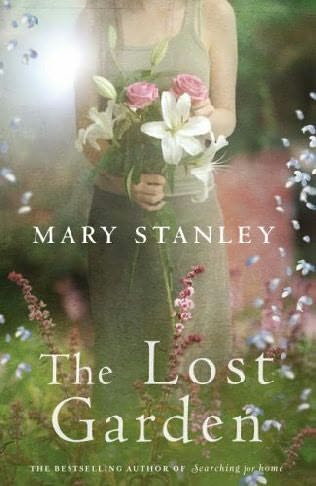
 is the story of Esme, a woman who has moved to Paris for a year to be closer to her lover. She meets an acquaintance of his named Jacob who happens to be a psychiatrist, and because she is lonely and bored she begins telling him the story of her life, a lot of which has to do with her unluckiness in love. Esme then moves on and begins a relationship with another man, but continues to think about the conversations she had with Jacob and the fact that she hadn't told him everything. Slowly, we meet Esme's three daughters as the pursue their interests around the world and events ultimately bring all four women back to their home in London.